















Quip
Imagine an autocorrect that looks at the context around where you're typing. Maybe that uncommon word is actually what you meant to type. A much smarter autocorrect was the hope.
The interaction is like Pinyin input: you type Chinese phonetically using Latin letters, then use number keys to choose which characters you meant. In Quip, you type normally and choose a suggested correction from a little bar beside the cursor.

Kevin, Ricky, Kai, and I built it at Hack the 6ix as a local Mac input method. I worked on the training data, model fine-tuning, and evaluation. The model had to deal with shorthand and messy typing, but also know when to leave the text alone.
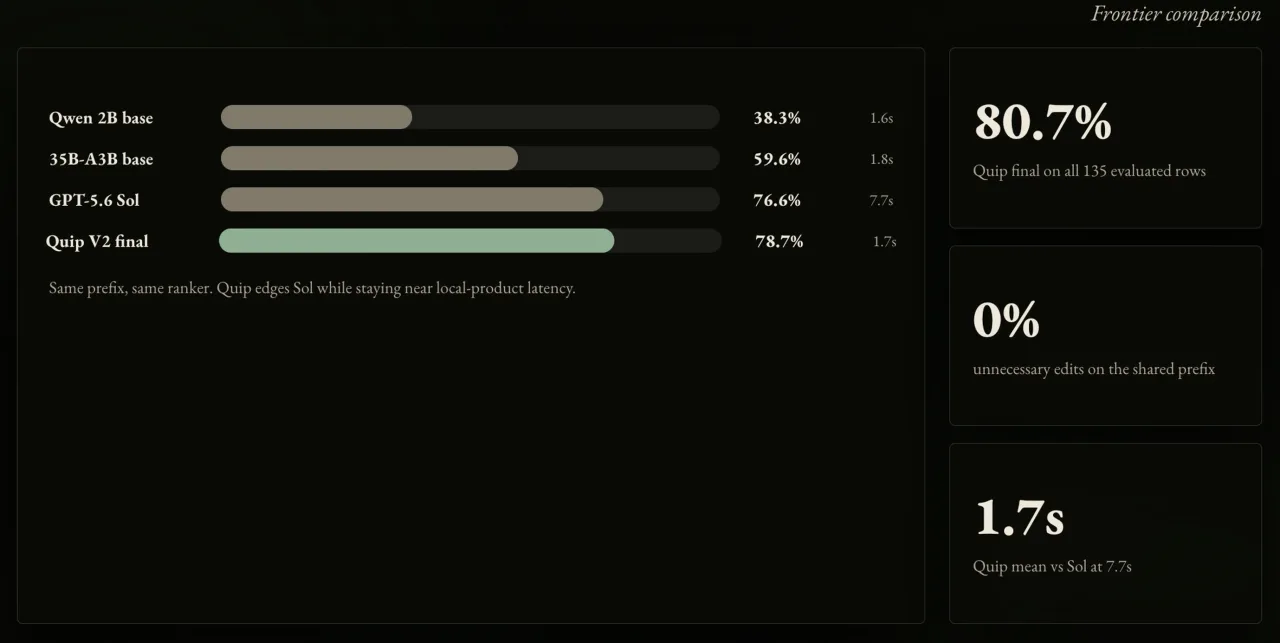
Twelve of our evaluation examples should have stayed unchanged. Our fine-tuned Qwen3.5-2B offered an unnecessary edit on one of them.
We generated five completions per example and ranked the suggestions with Quip's runtime ranker. Success meant the top suggestion matched an accepted correction, or that no edit was offered when the text should stay as it was. All five completions also had to follow the output schema. On the 135 examples we compared, the fine-tuned model scored 80.7% by that measure, 16.3 percentage points above the strongest Qwen base model we tested. This was a model-selection evaluation, not the locked test set.
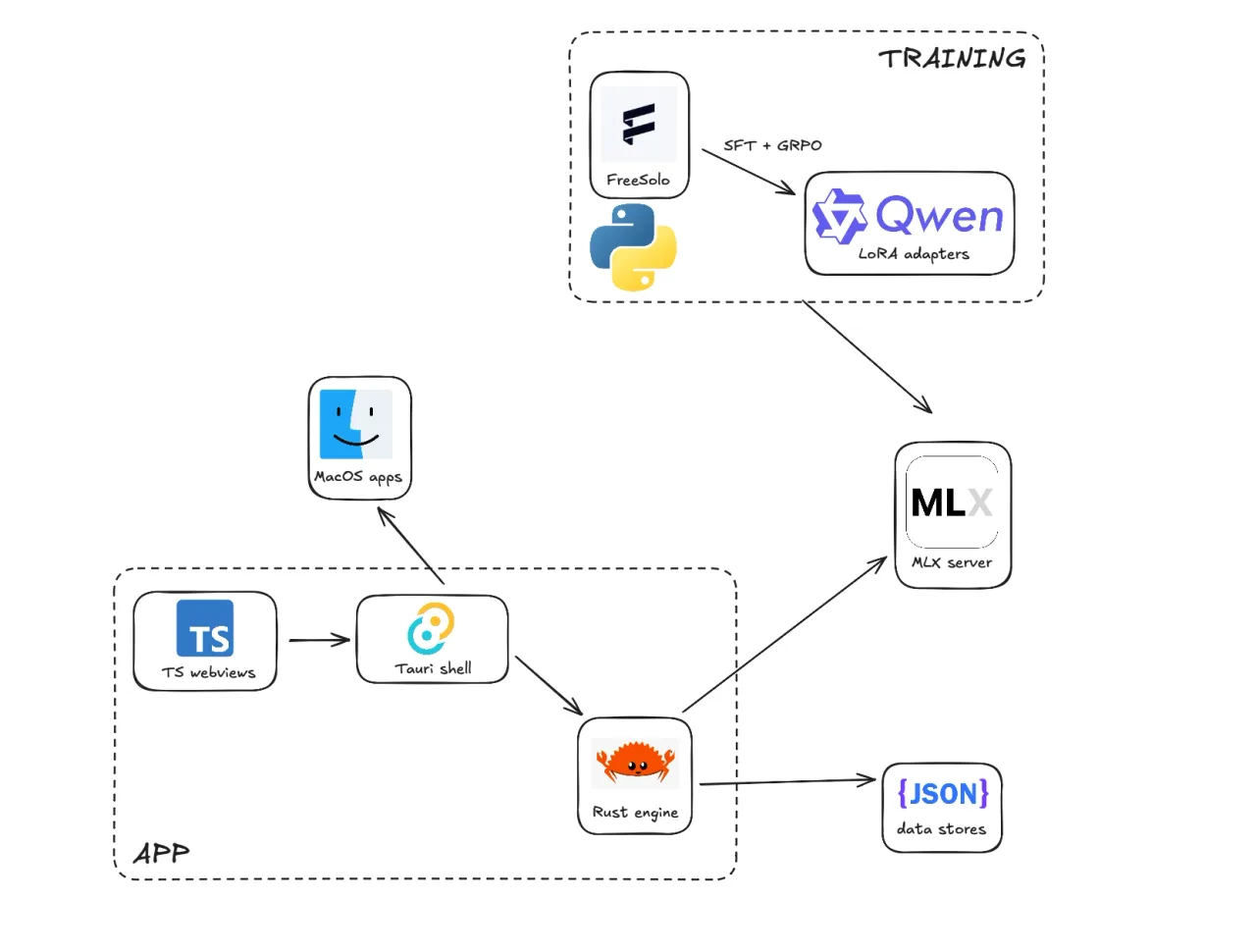
Swift handles the Mac input method, Rust manages the suggestions, and MLX runs the model locally. The per-user learning loop is still unfinished.